Confronting and Unpacking Mormonism’s History of White Supremacy
When Joanna Brooks wrote the manuscript for Mormonism and White Supremacy: American Religion and the Problem of Racial Innocence (Oxford University Press), she likely didn’t expect it to be so timely. (Few historical works ever are.) But the official publication date for the book, June 1, coincided with protests across the nation that called for an end to racial oppression. The loud chants for #BlackLivesMatter have forced institutions, corporations, and churches to reassess their connection to the systematic racism upon which America was built. Mormonism and White Supremacy, then, was perfectly timed to add to a growing chorus at a moment of discursive crescendo.

Yet in other ways, Brooks’s work was a long-time coming, as it reflects decades of work within the LDS intellectual community, and it builds on the efforts of previous historians and activists who have paved the way to reassess Mormonism’s troubled history with white supremacy. Yet what the book lacks in novelty it certainly makes up for in punch: it is one of the most trenchant and persuasive appeals to confront the history of LDS anti-black racism, past and present, and is a clarion call for academic intervention in contemporary issues. Scholarship, she argues, must accept its role of “unsettling and interjecting urgency into conversations around religion and race in America.” In this instance, her aim is to “evolve our discussion of the role of American Christianity has played in securing and sustaining racial privilege more broadly.”
Read More
 Yet Taylor Petrey, in
 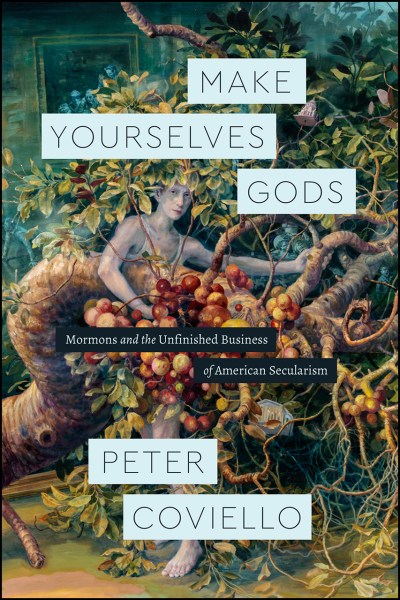 One of the harbingers of the Mormon studies field’s development has been the increasing number of scholars who have turned their attention to the faith in order to explain broader academic issues. The most recent contribution to this growing trend is
  This started changing about two decades ago, but from an unexpected place: scholars of American literature. In a way, this made sense: the field allowed readers to prioritize the text over its context, seemingly setting aside the controversial questions that served as battlegrounds in the past. Another development in American literature also enabled this examination: the move away from solely studying a “canon” of classic texts, and instead focusing on marginalized or overlooked voices. Thus, the field was ripe for harvest. Terryl Givens’s
  Benjamin E. Park