 Among the many casualties in the recent push to remove confederate monuments was Roger Taney. Taney was the Supreme Court justice who authored one of the most nefarious rulings in American history, the 1857 majority opinion in Dred Scott vs. Sanford that declared African Americans as non-citizens devoid of any rights. Despite his national reputation, Taney was a beloved (by some) son of Baltimore, and his statue sat prominently in Mount Vernon Place since 1887. In the midst of the fervid discussion concerning how America commemorates its racial past, city officials had the statue removed and placed in storage in August, 2017. Taney played a significant role in Baltimore, but it was not one that had to be commemorated.
Taney plays a crucial, if indirect, role in Martha S. Jones’s new book, Birthright Citizens: A History of Race and Rights in Antebellum America (Cambridge University Press, 2018). Focusing on Baltimore between the 1820s and the Civil War, Jones argues that “black Americans can serve as our guides through a history of race and rights” (9). That is, rather than just focusing on race and rights as a touchstone topic—which historians have increasingly done—we must also incorporate black voices into this analysis. Birthright Citizens is a model for how to incorporate more characters into our historical narratives. Read More
 The confirmation hearings for Brett Kavanaugh have reaffirmed something that has become standard today: America’s congressional system, included the senate, is a very partisan space. While the vote is expected to follow strict party lines, both sides have lobbied insults and accusations at one another, party leaders have used shady mechanisms to get their way, and opponents have declared the moral depravity of the other. But at least they haven’t started to throw swings at one another.
 One of the most famous elements concerning the Mormon faith is its belief in an expanded scriptural canon. Besides the Bible, members of the church believe that the Book of Mormon, Doctrine and Covenants, and Pearl of Great Price are holy texts that contain the word and commands of God; more liberally, and abstractly, Mormons also believe that the words uttered by leaders today are, at least in some form, scripture, even if the official canon has been functionally closed for some time.
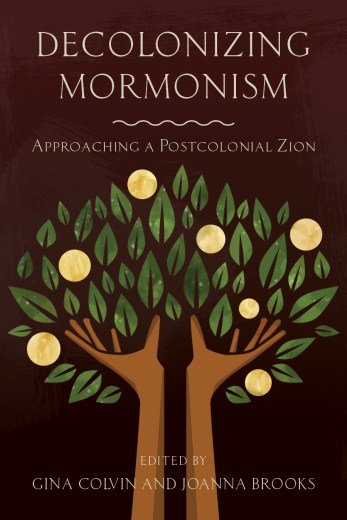 There are many books that influenced my development as a young Mormon academic, but few were as significant as Hugh Nibley’s
  Benjamin E. Park