Review: MacKay and Frederick, JOSEPH SMITH’S SEER STONES

While an undergrad at BYU I had the privilege to work as an intern for the LDS Church’s Historic Sites Committee. For two summers I assisted them in their preparation to restore Joseph and Emma’s home in Harmony, PA. (The home was completed last year.) My primary job was to investigate the translation of the Book of Mormon, which gave me the chance to dig into all the sources related to Joseph Smith’s seer stones. (I was thrilled to see that the restored Harmony home features a seer stone and hat to represent this more historically-accurate understanding of this important event.) It was not a shock for me, then, when the LDS Church released high-resolution photos of one of those stones, accompanying a new volume in the Joseph Smith Papers Project. I was even invited on RadioWest to discuss these stones and their importance. It was exciting to see us reckon with this history.

But this was likely new information for a majority of Mormons. Shocking, even. The Book of Mormon’s translation process had long been depicted as something that happened without such “folkloric” elements, and seer stones were of the realm of Mark Hoffman and South Park. But there it was: the seer stone, in all its glory. A carefully-written Ensign essay accompanied the images, but a lot of explanation was still required.

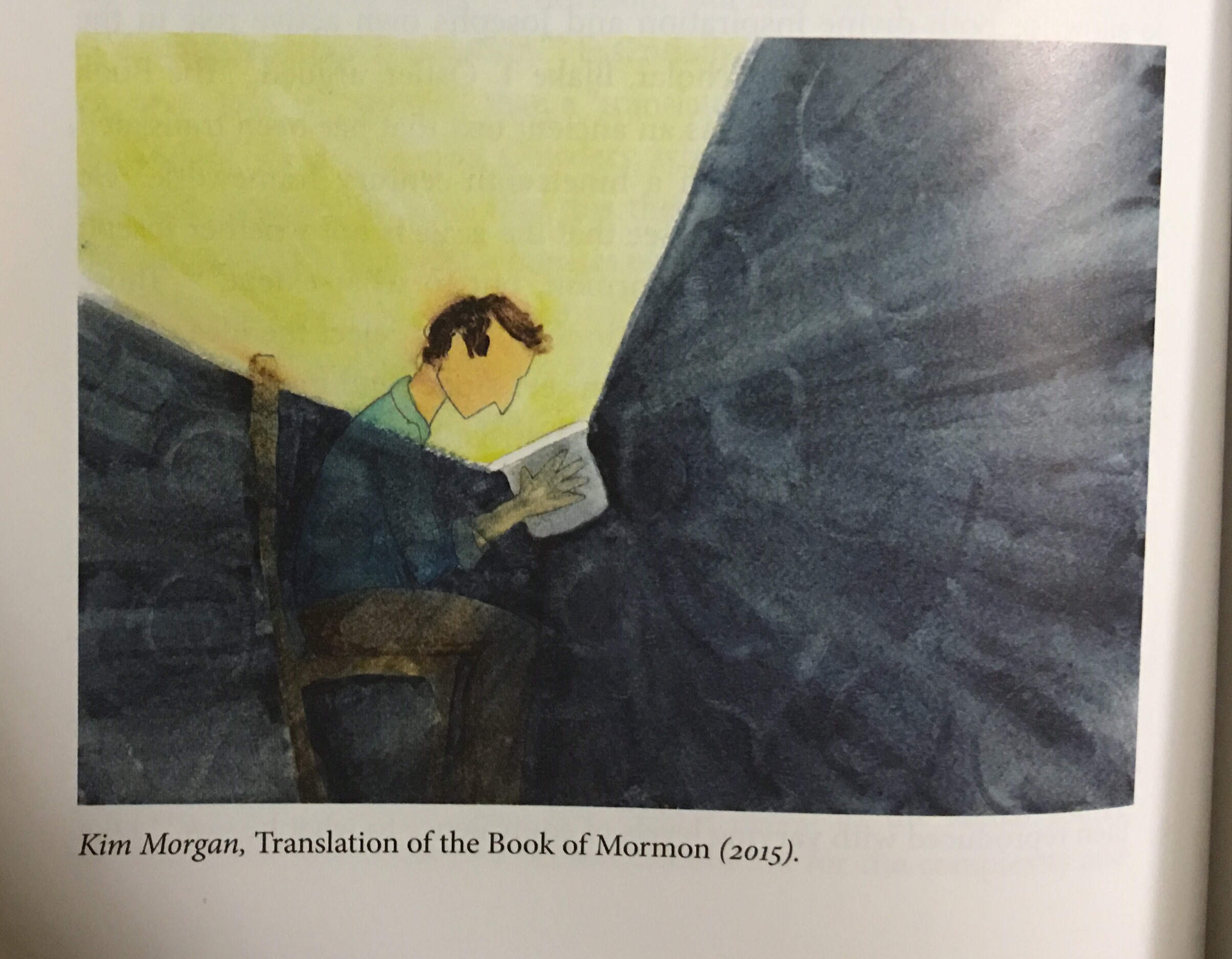
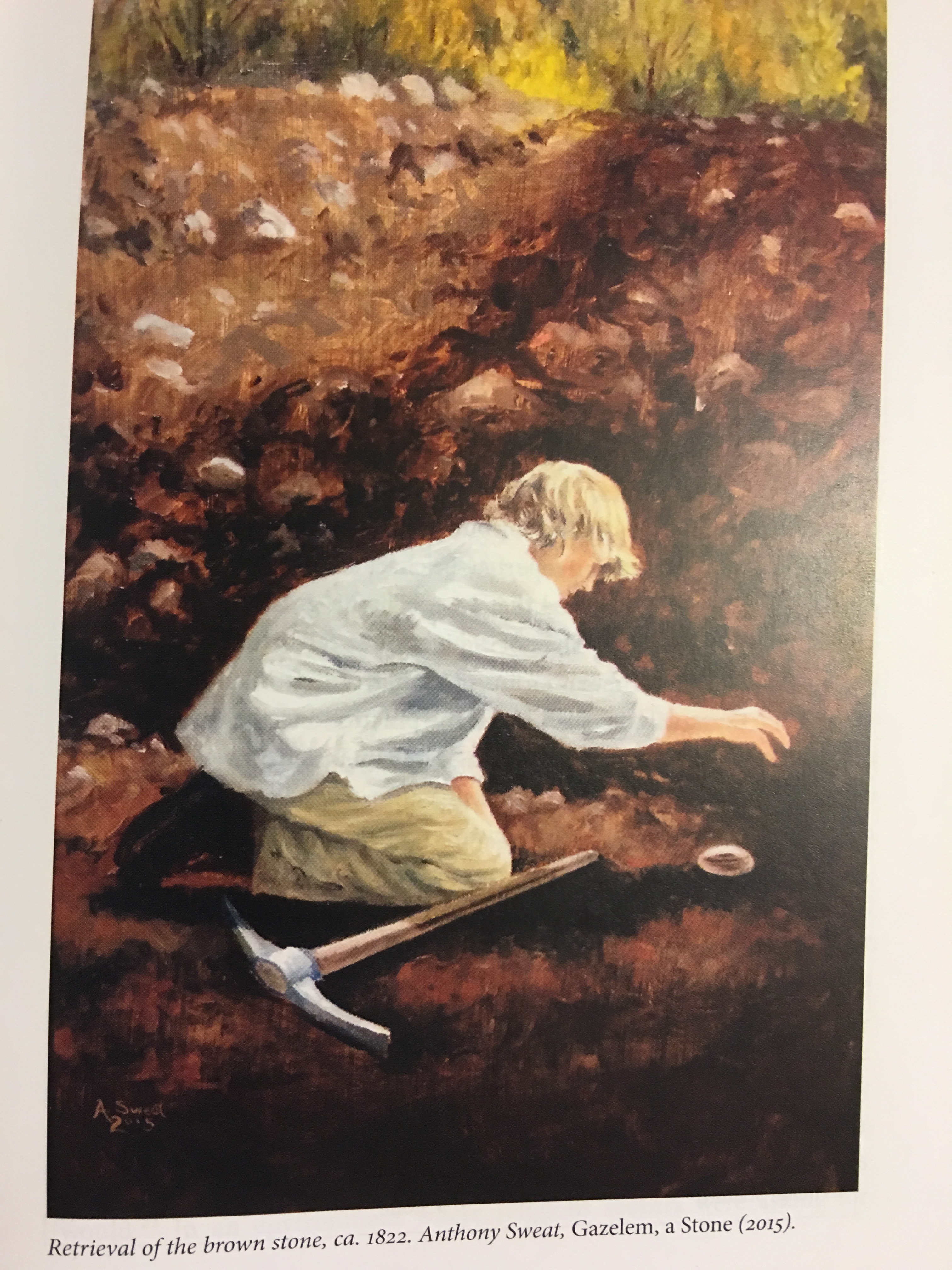
That’s where Joseph Smith’s Seer Stones comes in. The authors, Michael MacKay and Nicholas Frederick, both teach religious education at BYU. They are used to explaining difficult topics to church members. And their primary goal, as I see it, is to “domesticate” controversial matters. Mark Ashust-McGee used this word in his preface, where he calls the book a “friendly introduction” for Latter-day Saints (xiii). The fact that copies of this book, whose cover displays a bright image of the seer stone, will be front and center in Deseret Book, is a work of domestication indeed. (And something that would have been unthinkable a decade ago!) And the numerous images commissioned for the volume don an excellent job depicting what a faith-promoting vision can look like, which should hopefully replace the embarrassingly outdated illustrations that still appear in official sources.

But the book does more than just domesticate the stone itself. It also works to domesticate controversial sources. This includes contemporary accounts from Joseph Smith’s day that discuss his treasure-digging, as well as scholarly work written in recent decades by historians like Michael Quinn and Dan Vogel. These works used to be dismissed as mere anti-Mormonism. There is something striking about finding a chart that traces Joseph Smith’s treasure-digging expeditions, based on the work of Dan Vogel, in a book published by Deseret Book.

The book is at its best when it is translating historical lessons to Mormon readers. The rhetoric invoked by the authors is one of a friendly tutor, introducing Mormons to what “scholars” have said on this or that. Readers become well familiar with Nathan Hatch, Jon Butler, and Alan Taylor. Chapter 3, which spends a lot of time on the sources documenting how Smith found his various seer stones, is an excellent walk-through of the historical method. Rather than trying to give definitive answers to various perplexing questions, the authors are satisfied with presenting the evidence and competing interpretations and then allowing the readers to decide. This, I think, is the right approach. We, as an LDS community, need to learn to embrace the messiness of history.

There are certain points in the book where the goal is not just to translate scholarly literature to faithful saints, but also to explore “what the future of scholarly literature may look like” concerning the stones and their meanings (45). It is here that I thought the authors came up short. Attempting to speak to two audiences is a daunting and nearly impossible task. One example of these irreconcilable approaches is seen in the rigorous investigation into who possessed which seer stone on the one hand, followed by the highly speculative section that attempt to determine which seer stone in the Book of Mormon was the one Joseph Smith inherited on the other. Scholars will appreciate the former, but likely raise an eyebrow to the latter. Which is fine—I’m of the opinion that books work best when they have a well defined audience. The problem arises when you claim to have two.

That isn’t to say scholars won’t find good use in this volume. The tedious overview of primary sources is a wonderful introduction to the topic. And the annotated bibliography at the end of the book, one of many helpful and overly-nerdy appendixes over which source geeks can unite, is worth the price of the volume. At the least, this book is an immensely helpful reference book for historians. It’s just that historians aren’t the primary audience.

Which is, I think, how it should be. The LDS community needs this book. It is a model of how responsible and faithful scholarship should be written. Let’s hope it gets the audience it deserves.

Junto Post: Joseph Smith’s 1844 National Convention

Over at The Junto I wrote about the 1844 National Convention planned by the Mormons for Joseph Smiths presidential campaign. This is an outgrowth of my current research on the political culture of Mormon Nauvoo, which I promise is a lot of fun. In this particular post I talk about what these conventions tell us about America’s developing party rituals during the antebellum period. A taste:

There are many striking things about this sequence of events. But what stood out to me was the importance of political parties and organized mobilization. In 1844, political conventions were less than two decades old, and Americans were only just becoming accustomed to organized parties dominating the national landscape. The Anti-Masonic Party in 1831 was the first to hold a national convention, and the Democratic Convention in 1840 was the first to adopt a platform. These practices were a result of the Jacksonian impulse to expand decision-making power to a broader array of delegates. The platforms were meant to systematize national principles and policies. Even in Mormonism, where authority was based in a top-down structure, and even when it was obvious that Smith would gain the support of those in his faith, Smith’s followers elected to mimic national precedent by holding a series of state conventions, climaxing in a national convention. And even if they didn’t have an official platform, they at least had a series of resolutions meant to permeate national publications. Such a process would assure a democratic election. This attempt at expansive organization displayed the increasingly organized nature of American campaigns and electoral proceedings.

If you think this is fun, wait until my essay on the Council of Fifty, which will come out in a few weeks. It will go live as the Joseph Smith Papers Project publishes, for the first time, the minutes from that secretive organization. Be excited.

Review: Jill Lepore, JOE GOULD’S TEETH

It only takes two long sittings to make it through prolific author Jill Lepore’s recent book, Joe Gould’s Teeth (Knopf, 2016). Which is fitting, because it only took Lepore a year to write it. The book is an extension of her New Yorker essay by the same name, which gives you a taste of the tale’s intrigue as well as Lepore’s masterful style.

The story is fascinating enough. Raised by a privileged family and prepared for a Harvard-trained medical career like his father and grandfather before him, Gould’s life was driven by two characteristics: his madness and  obsession with writing. (Lepore speculates he suffered from hypergraphia.) He was kicked out of college (and still later got his degree through special arrangements), got caught up in the eugenicist movement, walked the length of Canada, and eventually settled down in New York where he personally witnessed the Harlem Rennaissance. Gould became close friends with leading modernist figures like Ezra Pound and EE Cummings, primarily because they were impressed with his grandiose project: an oral history of their time. He (and they) proclaimed that he had written millions of words and that the manuscript was one of the most important initiatives of the century.


The problem was that outside of a small circle, and besides a few excerpts published in various venues, the manuscript seemed non-existent. Gould became increasingly insane later in life, moving in and out of asylums. The New Yorker essayist who made Gould a national figure in 1942, Joseph Mitchell, later came to regret taking Gould’s word for granted and wrote another essay, after Gould’s death, announcing he was a fraud. A movie was made based on Mitchell’s work. Gould was now dismissed and tucked away to irrelevancy.

Yet Lepore was not convinced. She started pulling at the threads to get a better perspective of what actually happened. She discovered that after Mitchell published his exposé he was inundated with letters from people who insisted there was an oral history. And through even more scavenging—there is a lot of impressive archival research for such a small book—she was able to discover there was a multi-volume history. Kind of. Portions were tucked away in various collections. But they were odd. Gould was never as consistent as he claimed (he started and stopped many times, and most of the notebooks were lost or destroyed), and the history was never what most people thought. Rather, it was tied into a deeper, darker part of Gould’s past: his obsession with Augusta Savage.

Savage was an African-American sculptor at the heart of the Harlem Rennaisance. She was talented and respected, and was even trained in Europe, but was never able to achieve permanent success. She died in poverty and obscurity. She also spent a considerable amount of time trying to dodge Gould, who was obsessed with her. He told people they were engaged. He stalked her. Perhaps molested her. Possibly raped her. All this even after he believed blacks to be an inferior breed and decried interracial relationships. He was a creep. By the time she finished researching the book, you could tell Lepore was repulsed by her subject and refused to chase down more leads.

And yet Gould was frequently enabled by powerful figures. Even after he groped women. Even after he devolved into an unreliable beggar. He was still given chances. Savage wasn’t. The injustice of these comparative lives is stark in the narrative. This is a story of how the stories we tell can either hide or expose the unfair nature of American life.

I noticed an interesting continuity I found between this book and Lepore’s last, The Secret History of Wonder Woman (published way back in 2014). Both books traced the secret (and sexual) lives of eccentric men who were around Harvard around the 1910s and later (and remarkably) developed practices that became quite popular and important, but also divorced from their controversial founders and founding moments. In Wonder Woman, it was William Mouton Marston and the lie detector; in the most recent work, it’s Joe Gould and the recording of oral histories. I don’t know what the overall meanings or importance of these similarities are, but I’m excited to see what Harvardian eccentric Lepore finds next!

One quick word on method. This book is as much about the historical craft as it is about a historical tale. Lepore invites the reader into her investigative process of peeling back layers of illusion. It is about staring at the ugliness of the past, feeling the weight of historical distance, and trying to make sense of it. The book is more a New Yorker essay than a scholarly monograph, but it’s also an essay about the process of writing a scholarly monograph. (Her description of tangled balls of yarn on page 47 is an apt metaphor for the whole book.) I actually think this would be a great book to assign in a methods class for undergraduates. At the least, it’s a terrific choice to recommend to friends who are interested in knowing what a historian does.

And the fact that it’s a helluva story, written by one of the masters of the craft, helps all the more.

Why this Presidential Election is Not (Only) About Politics

In today’s polarized and partisan environment, it is sometimes difficult to remember that deep-rooted political debates are a natural outgrowth of democratic system. These divisions are a reflection of a healthy democracy, even if they often leads to frustration. In fact, the American government was founded on the premise of partisan debates. And unless you are a myopic sociopath, you probably have friends on both sides of the partisan divide. That’s how it’s supposed to be. Even if I fundamentally disagree with a lot of GOP politicians and their supporters, I (usually) think they are (mostly) good people. If America could survive and thrive under the Thomas Jefferson and John Adams clashes, then it’d be naive to expect something else today. That’s democracy.

This year’s presidential election does not fit that model, though. First of all, this is not, primarily, a fight between political principles. As people ranging from Charles Krauthammer to Barack Obama have noted, Donald Trump is barely a Republican and he certainly isn’t a conservative. He has been denounced by a growing number of GOP figures who recognize that he is not one of their own, and worry that his election would be more disastrous than continued Democratic governance. (Indeed, there’s enough GOP denouncements of Trump for an effective attack ad.) It’s telling that the last two Republicans to hold the presidential office, as well their most recent nominee, refuse to endorse Trump’s candidacy. Trump flaunts his divergence from many of the Republican Party’s most important policies, and given his penchant for changing opinions he can’t be relied upon to fulfill his promise to nominate justices friendly to conservative principles. Though some in the GOP retain some form of misguided loyalty to him, Trump will never display a reciprocal commitment, and in fact will burn the entire institution to the ground if it helps his egomaniac quest.

But I don’t think the political angle is the most dangerous aspect of Donald Trump’s presidential campaign.

Donald Trump is an affront to American values, regardless of what political party you affiliate with. Just in the course of the last year he has accused Mexican immigrants of being murderers and rapists, dehumanized women (see here, here, here, and here, though the list can go on for quite a while), promised to ban an entire religious faith, accused Muslim citizens of harboring terrorists, attacked a grieving gold star family, joked about assassinating either Clinton or her judicial appointments, made fun of a disabled reporter, made up non-existent details to escalate a political controversy, seemed eager to aggressively use nuclear weapons, suggested defaulting on national debts, jokingly(?) invited Russia to hack confidential state secrets, was not aware of Russian’s invasion into Ukraine, suggested that the only way he’d lose the election would be if it were rigged (an idea he’s repeated specifically about Pennsylvania, a state he’s polling behind in every measure), facilitated a sign-up sheet for goons to patrol election booths, promised to force the military to commit war crimes, claimed a federal judge could not be trusted due to his “Mexican heritage,” suggested women should be punished for having abortions, frequently incited and escalated violence at rallies, and refused to release his tax returns. And these are just the things I remember off the top of my head before my fingers got tired. (You can get a larger list here.)

Just a handful of those issues should disqualify a person for the presidency, regardless of their political positions. To still elect Trump with that record will demonstrate that a majority of Americans don’t care about facts, decency, and knowledge. But even those aren’t the only non-political dangers represented by a Trump victory.

One of the most real and imminent threats posed by Trump is a validation and amplification of our nation’s worst societal ills. His well-documented—and truly, irrefutably clear—history of racism, bigotry, and misogyny will justify atrocities against millions of our citizens by those who look to him as a guide. A generation of children will grow up with Trump as the image of their nation and model for their actions. Frankly, it will not be safe for minorities to live on our soil. If the man in the White House can call them “rapists” and accuse them of enabling terrorists, it is hard to fathom what they will face within their own neighborhoods. Numerous footage from Trump rallies display this amplifying effect. In important ways, the cultural ramifications of Trump’s victory are even more ominous than the political. To claim that the Republican Party can withstand a Trump presidency because there’s a chance he’ll help push through Republican policies is the utmost display of cultural privilege and demonstrates an utter detachment from the struggles faced by millions of Americans; it prioritizes theoretical victories over tangible atrocities. At the same moment we are once again hearing the crucial reminder that #blacklivesmatter, Trump’s election would confirm that their lives—as well as the lives of Muslims, hispanics, or any other ethnicity that makes up our beautiful multicultural community—actually do not matter at all.

Now, speaking to my Republican friends, I know that the Democratic alternative is, well, less than ideal. Hillary Clinton might very well encapsulate the very progressive establishment you detest, and you may picture her as the embodiment of the corrupt establishment. (Though I’d strongly disagree.) But Clinton’s “wrongness” still falls within the common political spectrum indicative of our democratic system. That is, even if you disagree with her, you will survive her tenure, just as you’ve survived Obama’s. There are checks and balances to limit the destruction inflicted by these types of political problems, as long as they fall along the acceptable spectrum.

Hell, given the traditional trends of our political history, the Republican Party will be in great position to unseat Clinton in 2020, as long as they nominate a non-crazy candidate. But throwing your support behind Trump only validates his cult within the party, which in turn will prolong the important conversations necessary to once again make the GOP a healthy and responsible political body. Republicans still have to choose what direction they will take in the next generation—the grievance-based exclusive retrenchment of a Ted Cruz, or a more sympathetic and outward-facing perspective of a John Kasich—but that conversation can only be started after the “Trump Train” has been conclusively derailed. A result that in any way validates Trump’s inane and demotic approach will merely furlough this necessary evolution, and suspend the type of political interchange between the parties that is necessary to make our democratic system strong.

You still might not be able to pull the lever for Clinton. You might be planning to vote third party or write-in your dream candidate. (For Utahns: Romney. For New York: Hamilton.) And my friends on the far left, who are legitimately concerned with Clinton’s war hawkishness and Wall Street coziness, might similarly dread the thought of voting for the “corrupt establishment.” I sympathize with that. But whether you are on the right or left of Clinton, if you are in a swing state, I kindly ask to reconsider your support for non-Clinton options. You have already done half of the work, given that you’ve decided to not vote for Trump, thereby resigning yourself to the possibility of a Clinton presidency. Now just consider going the rest of the way to assure that we will never see a Trump presidency, or even another Trump-like presidential campaign. It may not be “voting your conscience,” but I can’t think of many things that sooth your conscience more than keeping a demagogue out of the White House.

This is why this election is not primarily about politics. Or rather, it’s not primarily about democratic politics, anyway. Our democracy is based on principles that are genuinely under threat by the possible election of a bigoted, ignorant, racist, misogynist, and vindictive megalomaniac. This is not a democratic battle between liberalism and conservatism, Republicanism and progressivism. I look forward to those debates to re-commence in 2-4 years, but that’s not where we are now.

Rather, this is a battle between democracy and demagoguery, and to view it any other way reflects a limited understanding of the overall implications of our actions as well as an abdication of our moral duty.

Review: Nancy Isenberg, WHITE TRASH

I’ve already mentioned White Trash twice before, but I’ve been meaning to put up a brief review as well.

The book begins with the original colonizing goal of the British: to use the new American continent as a “wasteland” for unwanted people. From the very beginning, then, the idea of a degraded class inhabiting the geography was central to the American image. That image, however, transformed over the years as people sought new ways to redeem, reform, and re-train these people to perhaps be contributing members of society. Yet even the most literal thinkers who searched for ways to transform these idle and landless people often fell back on common tropes that took for granted the poor would always be with them and forever be a thorn in their side. It wasn’t until the presidential election of 1840 that the “squatter” gained a more romantic lore and a key pandering piece to democratic politics, and it wasn’t until the sectional crisis that “white trash” became both a common phrase and a potent political concept during the debates over slavery. Northerners argued that the poor white population in the south was indicative of slavery’s corrosive effects; conversely, southerners provided scientific arguments for a pure genetic American “breed.”

One thing that really stood out to me was that the confederate ideology, brilliantly covered in chapters 6 & 7, was based as much on class as it was race. Southern intellectuals and leaders conceptualized visions of society that halted any form of social mobility, thereby cementing the presence of the poor. That gives context to later formulations of neo-confederacy beliefs, and adds irony to appeals to this past age.

After the Civil War and reconstruction era, where southerners despised both “mongrels” (who mixed races) and “scalawags” (who were traitors to both race and class), eugenics mania swept the nation. It was sobering read about all the “purebred” efforts, like sterilization laws, as people pushed for perfect heredity. Moving into the twentieth century, the source base for Isenberg expands as she is able to draw from the rich paradoxes of popular media: television shows, movies, pastor’s wives, singers—all of these identities worked to both add new wrinkles to the white trash narrative while still cementing their class status in stone. The Duck Dynasty men, for instance, she’s their business attire to “look” the part of hillbillies. What I found fascinating was how the white trash image worked in seeming direct opposition to the American belief in social mobility: they have always been at the lower end of the American hierarchy, and there they will always remain, seemingly by choice. The very presence and perpetuation of white trash symbolism is the reaffirmation of class in America.

Yet for a book whose topic acknowledges and engages the great spectrum of class in America, it certainly spends most of its time looking in one direction. That is, a lot of the analysis is focused on how elites understood the downtrodden population. The first quarter of the book focuses on people like John Locke, Benjamin Franklin, and Thomas Jefferson—not exactly the most representative bunch. When Isenberg turns her attention to the actual people categorized as “white trash,” it is often an abstract and ominous “them” who are always just a step beyond the particulars. “White Trash” the concept gets a lot of fascinating detail, impressive specificity, and documented transformation, but the “white trash” as an actual class remain a group in the shadows awaiting molding by those who seek to take advantage of them.

This is probably due to sources, however, because as the chronology advances the subject base expands. Starting with the chapter on Andrew Jackson’s Cracker Country, the demeaned populace come into clearer view, and they indeed take a more prominent role in the twentieth century when they had the tools to celebrate and promote their heritage.

One final note of praise: the challenge of writing this kind of broad-sweeping book, as far as I understand it, is to cover such a large literature in such short a space. There is a lot of historiography on the 400 years in question. But Isenberg is a master historian, not only in demonstrating a depth in knowledge but also a skill in digesting so much material in a readable way. Her endnotes are a testament to the amount of work that goes into every paragraph:


It is easy to skim across the surface of four centuries, but difficult to actually immerse yourself in their intricacies. White Trash is an embodiment of the latter.