#KingdomOfNauvoo Comes to Utah

Just like the saints after they left Nauvoo behind, I’ll be heading out to the Great Salt Lake for ten days, starting this Wednesday. Lots of fun lectures/workshops/signings are planned. Here is the information for the public events:
- Benchmark Books (Wednesday, February 26)
- Utah State University (Thursday, February 27)
- 7:00pm
- USU Old Main 225, Logan
- link
- Brigham Young University (Friday, February 28)
- Dixie State University (Monday, March 2)
- 12:00pm
- DSU Gardner Center Conference Room B, St George
- The Book Bungalow (Monday, March 2)
- 7:00pm
- 94 W Tabernacle Street, St George
- link
- Southern Utah University (Tuesday, March 3)
- 1:00pm
- SUU Sharwan Smith Theater, Cedar City
- Utah Valley University (Wednesday, March 4)
- 12:00pm
- UVU Clarke Building 511
- link
- The King’s English Bookshop (Wednesday, March 4)
- 7:00pm
- 1511 South 1500 East, Salt Lake City
- link
- (will be recorded for CSPAN)
- Writ & Vision (Thursday, March 5)
- 7:00pm
- 274 W Center Street, Provo
I will be doing a number of private events, as well. And you can find info for all forthcoming activities here.
 One of the harbingers of the Mormon studies field’s development has been the increasing number of scholars who have turned their attention to the faith in order to explain broader academic issues. The most recent contribution to this growing trend is
  This started changing about two decades ago, but from an unexpected place: scholars of American literature. In a way, this made sense: the field allowed readers to prioritize the text over its context, seemingly setting aside the controversial questions that served as battlegrounds in the past. Another development in American literature also enabled this examination: the move away from solely studying a “canon” of classic texts, and instead focusing on marginalized or overlooked voices. Thus, the field was ripe for harvest. Terryl Givens’s
  In 2019, another author, UC-Santa Barbara scholar David Walker, similarly used the railroad to discuss modernity and Mormonism. But in
 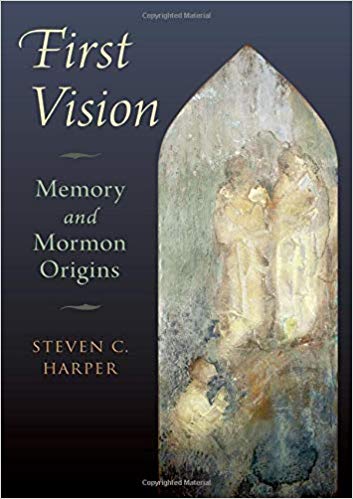 Given I was researching the topic in 2006, I fortunately had a lot of resources at my disposal. A quick search on google revealed partisan essays by Wesley Walters, Hugh Nibley, and a host of other critics and apologists. Most helpful for this recently-returned-missionary, however, was James Allen’s
  Benjamin E. Park